
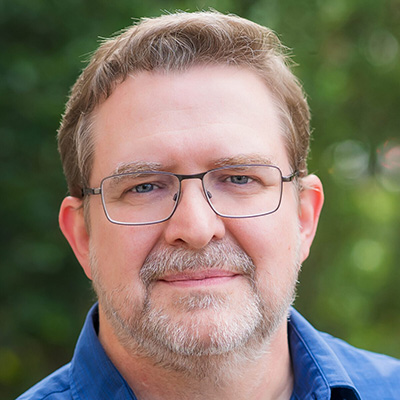
By James A. Hearn
“A foolish consistency is the hobgoblin of little minds, adored by little statesmen and philosophers and divines.” ~ Ralph Waldo Emerson, “Self-Reliance”
“Write what you know.” ~ Every Writer Who’s Ever Lived (Including Me)
#
The last time I read Emerson was in college, over three decades ago. I remember the highlights, maybe enough to answer a Final Jeopardy question, but not much beyond that one quote. I keep it in my back pocket, looking for occasions to casually slip it into conversation (much like Mr. Collins in Pride and Prejudice, displays of verbal brilliance on my part are usually the result of previous study).
Whenever someone needs a nudge to get out of a rut or take up a new challenge, out of my mouth comes, A foolish consistency is the hobgoblin of little minds, adored by little statesmen and philosophers and divines. It adds some gravitas if you and your listener have both been drinking, and if you can trot out Emerson with an absolute straight face.
In all seriousness, those are words to live by, a capital-T Truth. But how do they stack up against that cornerstone of writing advice, “Write what you know”?
#
In August of 2017, I was an unpublished writer at a science fiction and fantasy convention in Austin, Texas. I was writing what I knew, and at the time that was aliens, robots, and wizards. No one at the convention knew my name, and as an introvert, I liked it that way. I sat in the back of a room and listened to panels on craft given by top local writers, some useful, some not. I’m sure someone said, “Write what you know.”
At one panel on writing for anthologies, I heard crime writer Michael Bracken plug an upcoming book he was editing, The Eyes of Texas: Private Eyes from the Panhandle to the Piney Woods. The anthology had nothing to do with my two preferred genres, science fiction and fantasy, but something clicked when I heard Michael say he was looking specifically for Texan writers. Heck, I was from Texas, by God, and I could write a private eye story.
Couldn’t I?
If I couldn’t, what was I playing at here? Surely years of watching The Rockford Files, Magnum, P.I., Simon & Simon and a dozen other shows weren’t for nothing? I left the panel determined that I would try my hand at writing a private eye story. (You may be thinking I should’ve introduced myself to Mr. Bracken, as the editor of the anthology I was submitting to, and you’d be right. But that would’ve been out of character for the quiet introvert I play in real life.)
Fast forward to late December 2017, and I’m opening an unexpected Christmas gift from Michael, the email accepting “Trip Among the Bluebonnets” for The Eyes of Texas! My first professional sale, to my amazed delight, was not a science fiction or fantasy story, but a private eye mystery.
Weird.
More crime fiction sales followed, with a few speculative fiction stories sprinkled in, such as “Tunnel Visions” to Monsters, Movies & Mayhem and “The Third Wish” to Black Cat Weekly. Michael and I became friends and co-authored a football-themed crime story, “Blindsided,” that went on to be nominated for an Edgar Award for Best Short Story in 2022. Trip Allison and Denise Fletcher, my Texan private eyes, made their way into Mickey Finn: 21st Century Noir, Alfred Hitchcock’s Mystery Magazine, Dark of the Day: Eclipse Stories, and finally The Best Mystery Stories of the Year.
I’m still writing my science fiction and fantasy, though I haven’t enjoyed the level of success in my original genres as I have in crime fiction. Maybe one day, I’ll have a breakout story about a barbarian wielding a sword in one hand and a blaster in the other, set in a post-apocalyptic Mars.
But maybe not. Either way, I’m still having fun.
#
“Write what you know” has its place. To me, it simply means that you should examine your life for nuggets that readers might find interesting, whether that’s your job, your hobbies, or your life experiences. As an amateur astronomer, I had the perfect opportunity in Dark of the Day: Eclipse Stories to use astronomy as the background to a crime. Whatever your experience is, tapping into something you’re intimately familiar with lends credibility and authenticity to your story. So, write-what-you-know is still great advice.
But if I had slavishly followed that axiom, I never would’ve stepped out on a limb to write that first private eye story. Thinking back to Emerson, he wrote that a “foolish” consistency was the hobgoblin, not “consistency” itself. Applying it to writing, wouldn’t it be foolish never to try anything new? I’m not saying you should suddenly write a science fiction story if that’s not your thing. Perhaps a different subgenre of mysteries would be fun; if you write thrillers, try that cozy you’ve always wanted to try. If you’re always writing in third person, try first. If you’re always writing about someone similar to yourself, explore new characters with backgrounds different from your own. How else are we to grow as writers or as people, unless we’re pushing ourselves to take chances?
Who knows, maybe you’ll be nominated for a Nebula for Best Short Story. If so, remember to thank me in your acceptance speech if you win!
An Edgar Award nominee for Best Short Story, James A. Hearn writes in a variety of genres, including mystery, crime, science fiction, fantasy, horror, and sports fiction. His work has appeared in Alfred Hitchcock’s Mystery Magazine, numerous anthologies, and has been selected for inclusion in The Best Mystery Stories of the Year, Best American Mystery and Suspense, and The Best Private Eye Stories of the Year.




Like Andrew, I began my writing career intending to be a science fiction/fantasy writer and, like Andrew, an editor changed the trajectory of my writing career. I was a barely published SF/F writer when a magazine editor’s comments accompanying a rejection for a science fiction story prompted me to write a mystery. I subsequently sold my first three mystery short stories (two to that editor), convincing me that SF/F might not be where I should concentrate my attention.
I always find the “write what you know” bit of advice intriguing. Personally, I take it in the context of do your research so that you know and understand what you are writing about. Rather than simply based on personal experience. I also grew up watching all those wonderful mystery series from the 80s, but I still do my research. Whether it’s some simple Googling, grabbing a reference book from the shelf, or watching videos put out by real PIs.